
 |
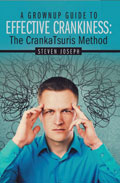
A Grownup Guide To Effective Crankiness: The CrankaTsuris Method
by Steven Joseph
Archway Publishing
Taking the ideas used in his previously published children's book, Joesph has created this humor-filled, crankiness guide for adults. Part of this idea is taking all the complaining and grumpiness that can build internally and personifying it as a dinosaur. The trick is knowing when and how to let this cranky beast roar and when to keep it quiet. Also important is how to respond when confronted with a raging CrankaTsuris. He uses the first few chapters of his book to describe the foul mood he refers to and how the CrankaTsuris Method can be applied. Several examples are used to show how different types of reactions to everyday, troublesome events can either help diffuse the bad mood or fuel it and create a worse situation. The author uses many personal experiences—ranging from his childhood memories to being a father and those of being a marathoner and lawyer—to illustrate how to use the CrankaTsuris to deal with life's toils and trials.
Pop culture references are one of the devices Joseph uses to explain his method of dealing with crankiness. Drawing from many diverse sources, including comic book heroes and fairy tales, allows Joseph a greater chance to find a connection with the reader. One quick example comes from the classic television series featuring Batman and his sidekick, Robin. Joseph talks about how traumatic it was to see the heroes constantly facing such great danger in each episode. However, he notices that the whole superhero thing would be easier if Robin were given a utility belt as Batman had and if Batman would check for nets before springing into a villain's hideout. Joseph is especially adept at looking at what is absurd in these references and, while pointing out how comical the situation is, tying these absurdities to his parallel narrative about the CrankaTsuris. Joseph does not go to the lengths of Swift's A Modest Proposal but does point out the illogicality of the situations to a positive effect. The satire that comes out in these parts, and throughout the book in general, is reminiscent of the comedy writings of Dave Barry and the satirical essays and stories David Sedaris has built into a career.
Humor is as big a part of this book as the actual insights into crankiness that Joseph provides. Often, this is done by taking familiar stories, cultural norms, or universal experiences and applying hyperbole to emphasize the point. There are a few grammatical errors, but these do not seem to have that much impact on the overall reading experience. There are times when the book seems to lose its focus, resulting in stories that do not do much to move the storyline forward. However, these may serve as small diversions that produce a chuckle or two along the greater narrative journey. What do come across are the joy and passion Joseph has for writing about this subject. Overall, readers who find themselves enjoying Joseph's voice and style will undoubtedly read this book with smiles on their faces.