
 |
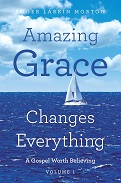
Amazing Grace Changes Everything: A Gospel Worth Believing, Volume 1
by Roger Larkin Morton
WestBow Press
The simple statement above captures the author's thoughtful assertion that the Bible supports the view that even those who die in sin may find salvation after death. Morton builds his argument bit by bit, beginning with the Apostles' and Nicene Creeds, which are the two most prevalent statements defining Christian faith. A history of the establishment of these creeds is included. The book is divided into four parts: "Part 1, The Prologue;" "Part 2, Explanations;" "Part 3, Application;" and "Part 4, Epilogue." To maintain continuity in the main manuscript, the author includes an appendix that analyzes biblical passages used throughout the book.
In this thought-provoking work, Morton first asserts his belief in an all-loving, all-powerful God and in the creeds that define the Christian faith. Using biblical scripture, he builds a reasoned argument that one might be saved even after death. He builds the argument on what scripture says, or, more importantly, doesn't say, about what happens after death. He addresses arguments that would likely be made against his belief. For example, he explores the argument that without fear of an eternal hell, people would become even more sinful. Finally, he envisions what life might be like should believers truly believe in God's all-powerful, all-loving essence and his desire to forgive—even after death. He does allow in his argument the idea of punishment for those who refuse God's love in life, but sees this as a cleansing fire which, should one desire it, will lead to salvation and eternity in God's presence.
Morton's ideas may be controversial to some, but this thoughtful, well-written argument is an intriguing study. A must-read for Christians and non-believers alike, it offers a different, broader definition of God, salvation, and life after death.
RECOMMENDED by the US Review