
 |
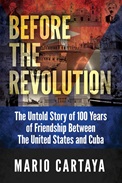
Before the Revolution: The Untold Story of 100 Years of Friendship Between the United States and Cuba
by Mario Cartaya
Morgan James Publishing
Cartaya's work is an ode to his father, Ignacio, and the unique bond shared between the US and Cuba in the hundred years leading up to 1960. While the dynamics of today between the two countries are certainly tenuous, the author pulls back the curtain on a time of immense productivity and collaboration, where US-manufactured businesses were booming in Cuba. In the midst of shedding light on this connection, Cartaya seamlessly weaves in historically significant events and their implications on the course of history.
Conjure the image of one's worldview being uprooted to pacify a new revolutionary government; the author's father is pushed into the impossible choice of leaving his homeland, Cuba, for the US, yet his emphasis on the fruitful connections—both business and personal—with his American contacts permeates into the author's own mindset. As the work progresses, Cartaya morphs into an archaeologist, both through his prose and photos, unearthing gems that speak to a long-lost partnership that ushered in one of the most prosperous periods in Cuban history. In fact, contrary to popular opinion, Havana and the United States, one could say, had become the epitome of diplomacy and cooperation.
Despite the rich historical context, the author goes to great lengths to keep the text from feeling like a history book. On the contrary, the flow is seamless, and audiences get a glimpse of the vibrant architecture and overall infrastructure. In many ways, it's a mini time capsule, transporting audiences to a time before Cuba became synonymous with communism and a US rival. Further, Cartaya reveals interesting tidbits that the layman will find completely obvious, too. One example of this is how the island of Cuba was discovered by Columbus, and he showed his desire to honor Spain's Prince Juan by naming it Juana.
Unfortunately, the stories and experiences also reveal the depth of the plight of the indigenous people, a repetitive pattern of using their strengths, learning from them, and then discarding them that had been a consistent pattern among Spanish conquistadors. Specifically, the Taíno and Ciboney tribes teach the European invaders to fish and farm, yet the story of Chief Hatyuey is emblematic of a cold-blooded slaughter juxtaposed with the demise of an unyieldingly loyal group of people.
Perhaps this connection and amicable relations were never more apparent than on the baseball diamond. Baseball became the single unifier, with Cuban leagues becoming racially integrated as early as the end of the nineteenth century—well before Major League Baseball. Cartaya highlights big names like Willie Mays and Pee Wee Reese as examples of this integration. The integration was so rampant that even behemoths like Coca-Cola, Sears, and General Electric had investments in Cuba. Digging deeper, the author uses well-known names like José Martí to show Cuba's fight for independence and its resilience no matter the adversity it faces. At every turn, this character is on full display, featuring a reality and shade of Cuba that gets lost in the current turmoil. Above all else, Cartaya's work expertly weaves together personal narrative, anecdotal gems, and historical events to create a meaningful, enriching experience for audiences.