
 |
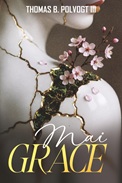
This family drama is a Christian-based tale whose character-driven plot and themes will interest a broader readership. Mai Grace Harrisen and her older brother Gene are part of a mixed-race, culturally mixed family with their plain-spoken Texan father and a Japanese-Anglo mother whose conversion to Christianity is very important to her. Mai moves easily between the two worlds, accepting these at face value, and she misses Japan when the family moves to Texas during her early childhood and later, during furloughs in Texas between her parents' missionary assignments. Mai's sense of home is flexible, and she generally copes with whatever happens in the present moment. Sometimes Houston is difficult for her too, since other kids are curious or even dismissive about her looks and cultural background. But Gene is always resistant and inflexible, rejecting anything related to Japan except his interest in karate. Gene not only refuses to deal with his complicated identity but also seems hostile toward it.
The author has skillfully chosen Mai as the story's narrator. She always seems poised to understand her parents and her brother, no matter the situation, and her voice is authoritative despite her young age. Her perceptions are mature for a youngster, though not exaggerated or out of line for her thoughtful nature. Mai discovers the depth of Gene's angst during an incident with some high school boys who follow her from junior high, taunting her about her Asian features. When Gene sorts the boys out with karate, she realizes for the first time that he carries grudges far longer than he should, overreacting instead of walking away. This sets the stage for Gene's future predicament, which affects the entire family more deeply than he ever imagined.
The succinct prose carries the story's emotional timbre and developing action without any overstating or overwriting. Polvogt writes with clarity and sensitivity, devising narrative lines that share deep wisdom through Mai's strong voice. Early in the story, he writes: "I have wondered often whether that was the first breaking or only the first one I noticed. A family does not split all at once. It cracks in small, almost polite ways. A name refused. A language abandoned. A father's warning answered with a laugh. A mother's silence mistaken for permission."
The tale offers many striking observations that pave the way for the action to come. This is a painful story, but Mai's patient narration brings beauty alongside the breaking. The characters are well-crafted and multidimensional, the sort that live in your heart long after the book is closed. One wonders if the author has either personally experienced this type of cultural displacement or been close to someone who has, because such a deeply thoughtful, creative presentation is hard to achieve without some biographical involvement. The story is specific to one multicultural family, the Harrisens, and yet the family's successes and obstacles can be universally embraced and explored through Polvogt's skilled storytelling. This is an incredibly moving tale, shaped by imagination and lived experience. It is accessible and meaningful to both young adult and adult readers.
RECOMMENDED by the US Review