
 |
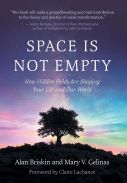
Space Is Not Empty: How Hidden Fields Are Shaping Your Life and Our World
by Alan Briskin and Mary Gelinas
FriesenPress
Influenced by topics at a conference on collaborative processes, the authors wondered if "fields," a term common to many disciplines, is the missing link in the conversation. Perhaps recognizing fields, as in the atmosphere around interactions, what is often overlooked, ignored, or taken for granted, is essential to change. What separates us and causes discord, they argue over the course of the book written in response to these wonderings, can begin to resolve when the fields surrounding it—personal, social, and spiritual (noetic)—are addressed.
Like fields—in the background, unstated but palpable—the book's layout plays an important role. After a history of fields (founded in dual research by two scientists, Maxwell and Faraday), personal, social, and noetic fields are defined and described. The book ends by using fields to bring about positive change. That the authors' stories are reserved for an appendix suggests how fields operate: not as directives and mandates but through observation and curious, conscientious inquiry. Fields are not forward and assertive, but sensed. They are paradigms, repositories of "vibes" built up over time, not bald statements. Summaries and charts accompany author biographies in the appendix as reference tools. The book's effectiveness is in its inviting, investigative approach.
The authors provide a variety of examples—from sports, business, the arts, and academia, among others—of fields in action. From these examples emerge fields' principles and characteristics. Images like murmurations and myths, and concepts such as synchronicity and tikkun olam support the stories' lessons. A few charts, illustrations, and photographs work to visualize the book's concepts. Taken together, these ways of understanding fields keep them mysterious and fascinating, yet penetrable and usable. What distinguishes the book from other self-help books of its kind is that it deals not in how-to, quick-fix methods but rather in an ongoing process that starts from the inside out. In short, it is a mindset shift.
While the language engages with spirituality in a way it admits may sound "woo-woo," the grounding in anecdotes is convincing and compelling. Its objective is ambitious: to replace the lie that people are silos with a vast interconnectedness. Stories are the main vehicle for forging links. In one seminal story, an astronaut hesitates to tell his partner, who actually walked on the moon, about his life-altering experience of viewing the Earth from the shuttle. Their ensuing, illuminating dialogue brings home the book's point about bridging gaps by airing feelings. In another story, the author makes a connection with her doctor that enlivens their encounter. In another, a trans performer designs a show paying tribute to their community of origin. Instead of rejecting the performer (as expected), the community embraces them. In other stories, change is more interior. A hospital administrator who hired a consultant to change his team's demeanor found that he was the source of a lot of their frustration. Previous stories are often referenced, creating a web of interlaced tales.
The book achieves its aim of creating a caring field through its human-interest-centeredness and positivity. It doesn't dwell on problems (though it does name some of them) but rather on solutions grounded in awareness and compassion. The stories, from myths to present times, show how change comes about. The book celebrates the impossible—that which seems like it "just is, as it's always been"—giving way to new possibilities.
RECOMMENDED by the US Review
A 2026 Eric Hoffer Book Award Category Finalist