
 |
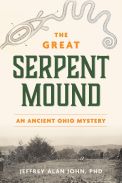
This engaging book carefully examines the theories, mysteries, and historical contexts of one of the United States' archaeological fascinations: Ohio's Great Serpent Mound. The massive effigy mound has held scientists, historians, cultural researchers, and anthropologists in wonder and in awe for decades. This book discusses how Westerners first discovered the mound, as well as the significance of the mound to the area's Indigenous peoples. Moreover, this book discusses state, federal, and Indigenous preservation efforts. It provides a clear overview of how organizations are working, despite various bureaucratic snags and regulations, to repatriate Indigenous artifacts and remains to their appropriate tribes and lands. Thus, this text leaves its audience wanting to learn even more not only about the Serpent Mound itself but also about the ongoing research on and the preservation methods of the mound.
One of the book's most interesting sections is about the initial controversy surrounding the establishment of Serpent Mound Park. The author explains that the park "rose out of obscurity to become a recognized archaeological site." F.W. Putnam embarked on a "decade-long process of investigation and preservation at the site." He and his assistants lived on the site, and his assistants probably included two women. The book not only highlights Putnam's groundbreaking research about the mounds, but also his radical inclusion of women in a field study during a time in which women still had limited professional and educational opportunities. This section discusses, too, Putnam's deliberate approach to excavation and preservation.
Other sections of the book feature rare facts that will fascinate the book's audience. For example, individuals learn that "the direction of these curves was found to indicate summer and winter solstices at the site." This construction shows that "'the Great Serpent people had a knowledge of the apparent movement of the sun.'" Another interesting fact that the book presents is that "the area of the effigy is located within an environment of high uranium ore concentration, as well as oil and acidic groundwater that seeps from its limestone bedrock." These facts show that the area's ancient Indigenous peoples possessed a keen, potentially scientific, understanding of the area.
As science develops, so does the research about Serpent Mound. One of the book's later chapters discusses how new research methods often lead to discoveries that challenge previous theories, research, and assumptions about the mound. This exceptional chapter shows that as scientific research methods rapidly develop, so will findings not only at the mound, but also wherever such research methods are employed. This chapter also respectfully discusses how scientific discoveries can counter the beliefs of Christians, New Age believers, and Indigenous peoples who see the site as a site of energy, giving rise to an entirely new set of controversies about the mound.
This book is written so that it is easily understandable by those who do not come from an academic background. History lovers will appreciate this book for its extensive historical context. Those who are interested in Indigenous cultures and history will find that it is a valuable contribution to that academic area's research canon. This is a fascinating read about one of Ohio's—and America's—most intriguing and mysterious places.
RECOMMENDED by the US Review
A 2026 Eric Hoffer Book Award Grand Prize Short List book