
 |
It is almost strange how this beguiling literary political thriller is so timely, considering that the author began writing the story some forty-five years ago. Gurr, now ninety years old, explains in his author's note that when he began writing his prophetic fiction, before setting the manuscript aside for personal reasons, the world was certainly different. For example, the Berlin Wall, a 103-mile concrete barrier erected to cut off Germany's democratic West Berlin from the communist East Berlin, was still standing. America and Russia, two of the most powerful countries on the planet, were in the midst of a decades-long ideological battle between capitalism and communism known as the Cold War. And the AIDS health crisis spread across the globe, bringing fear and prejudice worldwide.
Even today, as Gurr remarks, the world is just barely recovering from the global Covid health crisis, and Ukraine is now in the grip of what is shaping up to be another endless war against Russia. Americans are once more at political odds with one another over religion, healthcare, and the validity of science and the media. This is exactly what Gurr's novel examines, making for a well-timed and dynamic book. History repeats itself, wrestling with many of the same fears and challenges across generations. So, Gurr is acutely aware of how prescient his ninth novel is, set in the days of the nuclear arms race, when Americans and Russians deeply distrusted and feared each other, and when societal differences put people in conflict with one another. Gurr's narrative invites his readers into an enigmatic and clandestine account that considers some deeply critical and moral issues that all people face.
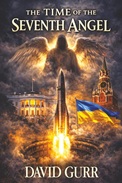
The novel primarily follows a divorced, formerly Catholic journalist named Pete Mathias, with the story picking up steam once Mathias finds himself embroiled in an investigation into a mysterious nuclear command center hidden deep in Virginia's Shenandoah Caverns. But first, Gurr's narrative opens in the coldness of Ukraine, a country of "crumbling gray stone and broken dreams," and the arrival of a mysterious, almost mythic figure who defies explanation and sets into motion something monumental.
At the same time, the nuclear command center grapples with an unbelievable situation that threatens the safety of America and beyond, while a Ukrainian researcher at risk holds the key to a medical breakthrough to cure one of the world's most deadly diseases. With these parallel plotlines, Gurr explores several significant topics, with an eye on how history continues to shape humanity and how people confront the duality of good and evil. But ultimately, he considers what would happen if mankind lost control while confronting the inexplicable. Altogether, it is a complex story that requires careful reading. But it is also a riveting one, complete with shadowy figures, government secrets at the highest levels, international spy warfare, medical marvels, and the lingering terror of a potential nuclear Armageddon.
The book's title and the religious overtones that thread through the narrative draw on the Bible's Book of Revelation, which recounts an apocalyptic figure revealing the ultimate mystery of God. The beginning of each chapter is prefaced with a line of verse from scripture, which helps build suspense as the story unfolds toward its climactic ending. Gurr also makes intriguing stylistic choices, referring to weaponry as dragons and naming his government characters by the positions they hold, which makes them symbolic and adds an aura of mystery. These are blank slates and could essentially exist at any point in the government's history.
The narrative includes some outdated terminology and stereotypes, but readers should keep in mind how they align with a particular character's beliefs given the period and culture of the story. In any case, Gurr's own Navy background and knowledge lend a particular authenticity to this convoluted and enigmatic story, and he provides stark and relevant observations on the current state of politics and religion, and on how mass media affects society. No doubt, Gurr's tale will call to mind works by powerhouse writers such as Dan Brown, Tom Clancy, and John le Carré, and he leaves his audience with much to ponder and hope for a more promising future.