
 |
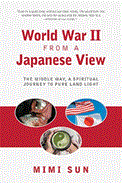
World War II from a Japanese View: The Middle Way, a Spiritual Journey to Pure Land Light
by Mimi Sun
AuthorHouse
In a story set entirely on Japan's home front during World War II, author Sun chronicles twelve years beginning around the onset of the Second Sino-Japanese War in 1937 and ending in 1949, four years after World War II ended. The narrative follows Kie—a young Japanese woman with stronger opinions than her patriarchal society endorses—as she tries to balance her pacifist leanings against the samurai-influenced aggression of her government.
Shortly after the book opens, Kie marries for love, and her future—though threatened by the shadow of war—seems full of possibility. But when her husband, Hiroshi, is drafted into the army, her world begins to unravel as the early successes of the Japanese military in Manchuria, Indochina, and eventually at Pearl Harbor give way to an inexorable retreat toward a homeland steadily beset by war-imposed hardships. Hiroshi returns as a shell of his former self, and to save herself and her family, Kie must transform from pacifist to fighter.
This book opens with a historical review that explains Japanese culture's blend of Buddhist and Shinto beliefs. Sun then uses symbols and mythology to reveal a layered yet ardent religious mentality among her characters; even as homeland suffering mounts, Kie and her family and friends cling to religion, believing persistence and faith will see them through. This book is educational, compelling, and personal, based on the experiences of the author's parents. Ultimately, it affirms that the tragedy of war and its aftermath is universal and transcends sides. Moreover, it confirms that human beings are resilient, and as with Kie, most will seek hope rather than surrender to hopelessness.
RECOMMENDED by the US Review