
 |
Environmental disaster has pushed
humanity onto enormous rafts that float along with the currents.
Simons' post-apocalyptic version of a hyper-evolved floating world is a
near utopia—and yet Sal is not happy. The young woman craves something
more than the monotony of everyday life on her raft, even though it
means comfort and success. Instead, she dreams of swimming with the
fish and living with the water instead of above it. She is drawn to a
controversial biotech lab specializing in body modifications, the likes
of which would make Sal's dreams come true. But to become a part of
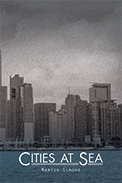
that world, Sal must leave everything—and everyone—she knows behind. Cities at Sea follows her story as she makes that decision, and its consequences.
Part cautionary tale, part celebration of the survivability of the human race, Cities at Sea
is a wholly believable and well-crafted narrative. Simons builds
realistic characters, politics, science, and technology, and fleshes
out the minor details of living on a city-sized raft. Despite the
book's setting in the far future, many of the issues dealt with are
relevant in our time. Chief among them is the idea of genetic
modification: even in a world of routine genetic embryo testing and
modifications, a new form of external genetic changes is approached by
society as alien and unnatural. Yet at no point does Simons push his
own ideals onto the reader; you are left to draw your own conclusions.
Even the idea of evolution itself is brought under a microscope. What
does it truly mean to evolve? In Sal's case, to evolve she must look
back to her primitive roots. This realization leads her through a
journey that will test her ideals, and spark a change in the world as
she knows it.
RECOMMENDED by The US Review