
 |
That thorny succulents vibrate with life
And soothe thereby the passing boatman’s heart."
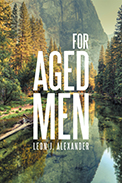
Growing up in the early twentieth century, Alexander can provide a first-person account of when the draft passed into law by one vote in a divided Congress. He was drafted into the Navy’s Seabee Corps in ‘43. However, despite this and other interesting tidbits in the introduction, the poetry compilation morphs into a search for meaning in nature’s caresses, river rafting excursions surrounded in the majestic Colorado River rapids. What one does when life falls apart at the seams is a question at the forefront of Alexander’s rafting adventures.
Exploration of nature is tied directly to the exploration of one’s self and identity, both of the human spirit and one’s sexual identity. Poems like “Lava Rocks” and “Mud” symbolize the roadblocks that will arise on the path to our desires. Meanwhile, “Colorado” speaks to how perfection—in this case, the Prussian green color of the river—transforms into the muddled “whipped chocolate” that cascades down before merging with another body of water.
Interestingly, Alexander’s ferocity roars to the surface in the namesake poem, where he vehemently suggests that waiting for death to come and get you is not the right answer. On the contrary, his poem is a testament to the passage of time and a mutual understanding of living through youth like his peers on the raft. In addition to adventure and nature poems, Alexander writes poetry about love and vulnerability, of which two pieces, in particular, stand out: “Cages” and “Key.” Alexander connects the two in their narrative; the speaker who is guarding his heart with such care and caution that he keeps it caged away finally finds a key to unlock his cage. Ultimately, the introduction makes sense as it sheds light on Alexander’s life and gives a meaningful backdrop to the entire poetry compilation.