


 Author Spotlight
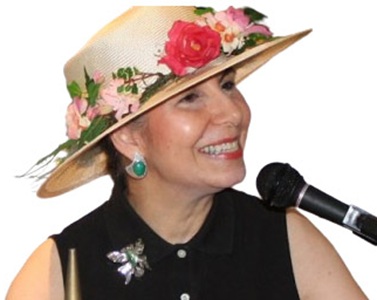
LindaAnn LoSchiavo
Whether the subject is my mother's cancer, real-life suicides, or gothic vampires, I'm writing about the same thing: How we face what threatens to take people from us, and what we say to the dark. Formal verse is how I keep that grief and fear in a container strong enough to hold it. For example, in my book Past Tense: Portraits and Poems of Suicides, I invited the dead back to speak for themselves. It is a book of portraits of real people, some of whom history has reduced to a single line. My approach here was to let the individual and the record suggest the form. For Aaron Swartz, a programmer who died at 26, the poem is written as computer code: a function checks whether information is restricted, and if it is, the poem announces his loss and stops. If it isn't, the function calls itself, and his echo repeats without end. For the Buddhist monk, who burned himself in protest in Saigon in 1963, I chose the tanka, beginning with his name, because his act was quiet and complete. For Ricardo Cruciani, a convicted felon, I wrote the villanelle "Demonic Doctor," because its refrains keep returning, mirroring his pattern of assaults on his patients. For the teenage rapper Capital Steez, I used heroic couplets, because so much of rap runs on rhymed couplets. Iambic pentameter is my pen's default, and I hold to it even in "Golden Shovels," where the borrowed end-words already make the line hard to control. Biography might explain a life. A form can help the reader access part of that person's anguish
The book that US Review of Books recently reviewed is an obituary, a death certificate, a police report, or a trial's aftermath that shrinks a human being to a few facts and omits the rest. A suicide inside my own family became a shameful secret that relatives kept quiet about. In 1938, my great-aunt Angelina DeMarco Costa died by suicide at thirty-eight. The death certificate gave her exactly five words. After her funeral, the family decided she no longer existed. Her daughter Lina kept the truth to herself until both of Angelina's sisters had died. One of them was my paternal grandmother, who disguised her kid sister's violent cause of death behind bland phrases such as "she died young," "it was unexpected," and "God took her suddenly," and buried her photographs. In the Aeolian Islands community my family came from, suicide carried a stigma heavier than most people realize, so the silence wasn't just grief. It was a rule. When I tried to imagine my great-aunt Angelina's state of mind, I could not. A conspiracy had erased her, and there was nothing left to imagine from. Then my cousin Joseph LoSchiavo died by suicide, and I did not want him erased, too, reduced to a name on a tombstone in Green-Wood Cemetery in Brooklyn, NY. For Past Tense: Portraits and Poems of Suicides, I gathered twenty-three lives in one unconventional collection—including lesser-known names who might otherwise be forgotten—and gave each person aa form that suited them.
I am always writing. Currently, I'm bound for terra incognita. My next three projects differ in subject and form. First comes Dracula Before Stoker: The Prequel, an epistolary gothic novelette already accepted for publication. Since every letter is essentially a dramatic monologue, the playwright in me gets a new stage. Next, Return of the Werewolf pairs formal verse with prose poetry, and no two poems take the same approach to the werewolf: some turn to social justice, others to domestic violence. The most personal project of these new projects, Dark and Airy Spirits, explores death and the afterlife in varied poetic formats—rondeaus, nonets, dramatic monologues, mesostich acrostics, eecho verses, nonce forms, and so on—and was inspired by my own encounters with ghosts, my family's supernatural experiences, and my uncle's poker games in a haunted house, which poltergeists—those vaudevillians of the void—tried to disrupt. The speaker of Frost's poem "The Road Not Taken" felt he must choose one direction. I'm taking three. Ideally, I will meet new readers along the way.
Readers can follow my writing on my Substack, @GreenwichVillagePoet and on my YouTube channel, LindaAnn Literary, book updates at the publisher. I'd like to close with one sentence that New York State Senator Erik Bottcher wrote on the back cover: "I hope this book helps reduce stigma, inspires empathy, and reminds readers that help is available and that every life has value."
I appreciated the way reviewer Niknesha Hairston captured the essence of my book. She wrote that the collection "encourages reflection, empathy, and awareness" and "offers more insight than an obituary ever could," which is what I was hoping the poems would do. The goal of Past Tense: Portraits and Poems of Suicides was never closure but to offer something better—continuity.
About the Author: Native New Yorker LindaAnn LoSchiavo, an award-winning member of BFS, HWA, SFPA, and The Dramatists Guild, released two full-length collections and nine chapbooks. Titles for 2025: Cancer Courts My Mother—winner of the BREW Seal of Excellence and the Voyages of Verses BBook Award—and Vampire Verses—winner of the Excellencee in Literature Award and The Bookish Reader's Pick Award. Forthcoming: Past Tense: Portraits and Poems of Suicides and Dracula Before Stoker: The Prequel. Book accolades also include an Elgin Award, Chrysalis BREW Project Awards, The World's Best Magazine's Book of Excellence Award, Spotlyts Story Award, and Finalist status for Eric Hoffer Book Award.
Author Spotlight is an author interview exclusively for The US Review of Books and available through the Platinum Plus Review service. Author Spotlight interviews may be reprinted with full attribution to "The US Review of Books." |
